RWHS & Sanitiation Program
In tribal regions, where Rajasthan Bal Kalyan Samiti (RBKS) works, the community is facing an acute shortage of resources and infrastructure facilities, mainly with respect to education, health, and drinking water. RBKS focuses on community awareness and innovative approaches in development.
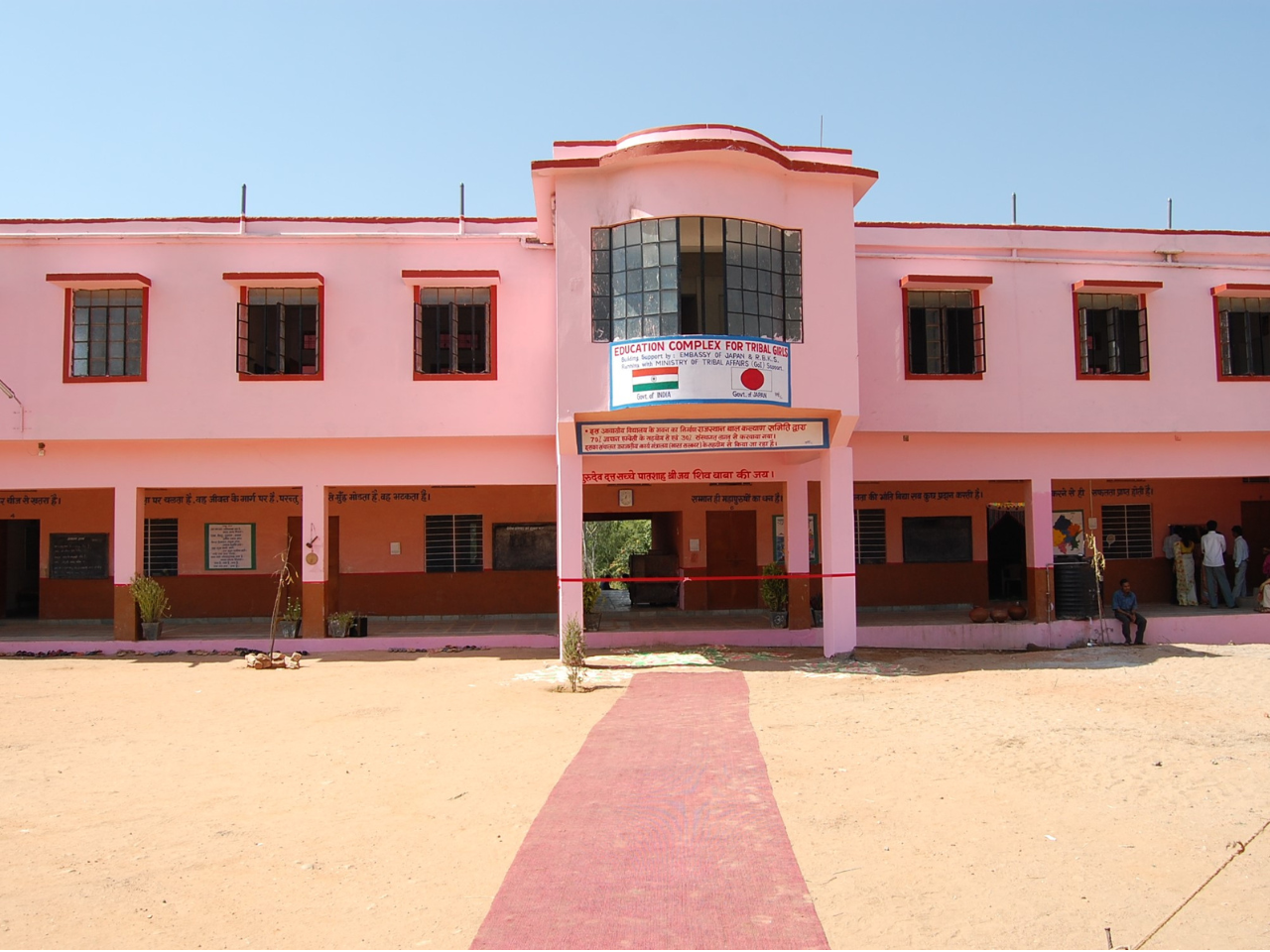
It started a new center, “Beeda Education Complex,” to provide residential education to 200 tribal girls. The campus faced a scarcity of water supply, and RBKS was buying at least an anker (5000 liters) of water per day at the cost of Rs. 400/- per tanker. Similarly, sanitation facilities were lacking compared to the number of children. Before the Water and Sanitation Project was implemented at Beeda campus.
Activities Under the Project
Construction of water storage tanks and setting a filter system:
In the project proposal, it was planned to construct two storage tanks to cover the entire roof area. So the project constructed two tanks with a storage capacity of 2.5 Lakh liters of water. The filter system is already set for these tanks.
Developing a water linkage system to divert water from all roofs to these tanks: To collect roof rainwater, a linkage system is established to divert water from a total of Square feet of roof area to these tanks. This water is used for bathing, cleaning, washing, and irrigation for growing vegetables for hostel girls.
Installation of Safe Drinking Water Supply Source: Under this head, one well is created by deepening work and another development with a contract of user right for a ten-year lease at this movement, and the option of further extension or getting a well for the benefit of the complex.
Construction of Toilet and Bathroom facilities for tribal girls:
RBKS has been running a hostel for tribal girls since 1985. At present, 500 girls are living in the hostel, and they belong to the tribal community. Earlier, we did not have a sufficient number of sanitation blocks for all the girls due to a lack of sufficient per capita water quantity, and also a lack of funds required. In this adverse condition, under this project, Wells for India supports the construction of a sanitation block in the hostel, including a toilet and a bathroom. This sanitation block includes 8 units (toilets + Bathrooms), making a total of 16 facilities. Girls are using the facilities.
Girl's Response to Intervention:
Girls are happy that they have enough water for bathing, washing clothes, and cleaning the room. With the construction of RWHS and well development work, they have sufficient water now. These girls also want to develop the green campus plantations, and a group of 4 to 5 girls is looking after a particular plant. Now, many plants have developed and do not require much attention. Every year, the plantations are done, and hostel girls take care of the particular plant. No, with the campus looking greener. Girls, along with the warden, also develop a kitchen garden and produce fresh vegetables for their meals. For cleaning toiletries, they have water at a short distance, so the use of sanitation habits is developing among girls. This is required for hygienic purposes, and for growing girls, sanitation blocks are necessary.
In the year 2011, a water purifier system was fixed near RWHS. An agency, namely TMF, US, supports the machine and the construction expenses made by RBKS. Now, children are getting safe drinking water.